Esta web utiliza cookies propias y de terceros que nos permiten optimizar tu experiencia en el sitio web, evaluar su rendimiento, generar estadísticas de uso y mejorar y añadir nuevas funcionalidades. Mediante el análisis de tus hábitos de navegación podemos mostrar contenidos más relevantes y medir las interacciones con la web.
Puede obtener más información aquí.
Unha cookie é un ficheiro que se descarga no teu ordenador ao acceder a determiñadas páxinas web.As cookies permiten a unha páxina, entre outras cousas, almacenar e recuperar información sobre os hábitos de navegación dun usuario ou do seu equipo, xestionar o acceso de usuarios a zonas restrinxidas da web, etc.Tipo de cookies utiliza esta páxina web:
Este tipo de cookies permiten al usuario la navegación a través de una página web, plataforma o aplicación y la utilización de las diferentes opciones o servicios que en ella existan como, por ejemplo, controlar el tráfico y la comunicación de datos, identificar la sesión, acceder a partes de acceso restringido, seleccionar el idioma, o compartir contenidos a través de redes sociales.
| Nombre | Descripcion | Duración | Habilitado |
|---|---|---|---|
| ID de tu sesión. Te identifica en este navegador y nos permite gestionar tus cookies o almacenar tu cesta de la compra. | 8760 horas | ||
| Indica qué cookies has aceptado. | 8760 horas | ||
| Una cookie PHPSESSID es una cookie de sesión que se utiliza para identificar la sesión de un usuario en un sitio web. | 8760 horas |
Son aquéllas que posibilitan el seguimiento y análisis del comportamiento de los usuarios en nuestra página. La información recogida se utiliza para la medición de la actividad de los usuarios en la web y la elaboración de perfiles de navegación de los usuarios, con la finalidad de mejorar la web, así como los productos y servicios ofertados.
| Nombre | Descripcion | Duración | Habilitado |
|---|---|---|---|
| Es un servicio de analítica web que utiliza cookies de análisis. | 8760 horas |
Estas cookies pueden ser establecidas a través de nuestro sitio por nuestros socios publicitarios. Pueden ser utilizadas por esas empresas para crear un perfil de sus intereses y mostrarle anuncios relevantes en otros sitios. No almacenan directamente información personal, sino que se basan en la identificación única de su navegador y dispositivo de Internet. Si no permite utilizar estas cookies, verá menos publicidad dirigida.
| Nombre | Descripcion | Duración | Habilitado |
|---|
Que son as cookies?
Unha cookie é un ficheiro que se descarga no seu ordenador ao acceder a determinadas páxinas web. As cookies permítenlle a unha páxina web, entre outras cousas, almacenar e recuperar información sobre os hábitos de navegación dun usuario ou do seu equipo, xestionar o acceso de usuarios a zonas restrinxidas da web etc.
Que tipo de cookies utiliza esta páxina web?
Cookies de análise
Son aquelas que posibilitan o seguimento e a análise do comportamento dos usuarios na nosa páxina. A información recollida utilízase para a medición da actividade dos usuarios na web e a elaboración de perfís de navegación dos usuarios coa finalidade de mellorar a web, así como os produtos e servizos ofertados.
Cookies técnicas
Este tipo de cookies permítenlle ao usuario a navegación a través dunha páxina web, plataforma ou aplicación e a utilización das diferentes opcións ou servizos que nela existan, como, por exemplo, controlar o tráfico e a comunicación de datos, identificar a sesión, acceder a partes de acceso restrinxido ou compartir contidos a través de redes sociais.
Cookies de personalización
Son aquelas que nos permiten adaptar a navegación na nosa páxina web ás súas preferencias (idioma, navegador utilizado etc.).
| Nome | Propia / Terceiros | Duración | Descripción | Propietario |
| _gat | Terceiros | 1 minuto | Se usa para limitar a porcentaxe de solicitudes. | Google Analytics |
| _ga | Terceiros | 2 anos | Se usa para distinguir os usuarios. | Google Analytics |
| _gid | Terceiros | 24 horas | Se usa para distinguir os usuarios. | Google Analytics |
| PHPSESSID | Propia | Sesion | Cookie de Sesion, desaparece cando se cerra a web. | Arnoia |
| COOKIE_CONSENT | Propia | 1 mes | Cookie de personalización. | Arnoia |
| SESS_ID | Propia | 10 días | Cookie de Sesion. | Arnoia |
As cookies empregadas nesta páxina web son utilizadas polo responsable legal desta páxina web e polo seguinte servizo ou provedor de servizos:
- Google Analytics: é un servizo de analítica web que utiliza cookies de análise. Pode consultar a política de privacidade deste servizo neste enderezo web: http://www.google.com/intl/es/analytics/privacyoverview.html.
Como podo desactivar ou eliminar as cookies?
Pode permitir, bloquear ou eliminar as cookies instaladas no seu equipo mediante a configuración das opcións do navegador instalado no seu ordenador. Nos seguintes enlaces achará información adicional sobre as opcións de configuración das cookies nos distintos navegadores.
– Internet Explorer: http://windows.microsoft.com/es-es/windows7/how-to-manage-cookies-in-internet-explorer-9
– Google Chrome: http://support.google.com/chrome/bin/answer.py?hl=es&answer=95647
– Firefox: http://support.mozilla.org/es/kb/habilitar-y-deshabilitar-cookies-que-los-sitios-we
– Safari: http://support.apple.com/kb/ph5042
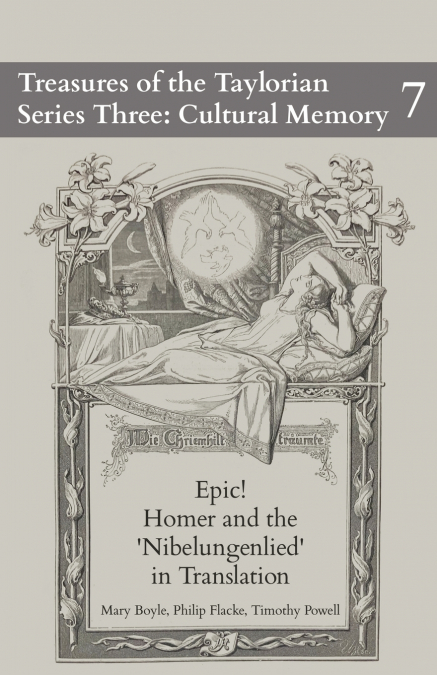
The exhibition âÇÖEpic! Homer and the Nibelungenlied in TranslationâÇÖ in the Taylor Institution Library, Oxford, reveals the different stages, trends, key impulses, and idiosyncratic approaches to the translation and adaptation of Homer and the Nibelungenlied. Showcasing a range of material from the Taylor Institution LibraryâÇÖs collections, alongside additions from the Bodleian Library, and from private collections, âÇÖEpic!âÇÖ explores the deeply entwined history between these two cultural touchstones.This entanglement began with the judgement of the Swiss critic Johann Jakob Bodmer âÇÖDieses Gedicht hat etwas iliadischesâÇÖ - âÇÖThere is something Iliad-like about this poemâÇÖ, who set the tone for public perceptions of the Nibelungenlied shortly after its rediscovery in the mid-eighteenth century. With these words Bodmer prompted future generations to look at the medieval German epic in terms of Homer, some of whom grappled with this idea quite willingly, others reluctantly. As late as the 1970s, when the German writer Franz Fühmann attempted to re-envision the Nibelungenlied in the light of national identity in the GDR, he found it necessary first of all to distance himself from the deeply entrenched trope of the âÇÖGerman IliadâÇÖ. What does this trope mean exactly? What are the implications of looking at the Nibelungenlied through the prism of the Homeric epics - and vice versa? In what way did it affect dealing with the texts, with ideas about the epic and ideas about things which have been tied to it in different ways - about gender, nation, violence? And how do these readings still inform our world today?The books featured in this exhibition tell a story, not simply of translation, but of the various attempts by authors to assert ownership of these epics for different national and pre-national identities, for specific ideas of masculinity and femininity, for militaristic agendas and racist ideologies, and also, more recently, for feminist and queer causes. Building on the 2022 exhibition âÇÖViolent Victorian MedievalismâÇÖ curated by Mary Boyle, âÇÖEpic!âÇÖ also shines particular light on adaptations that have been created for children, and to the fraught topic of women and violence.Three essays by Mary Boyle, Philip Flacke, and Timothy Powell discuss various stages of the epicsâÇÖ reception in four centuries where these ideological battles have been fought. These essays are accompanied by two extensive appendices that chronicle the inexhaustible possibilities of telling the same story, as well as the often bizarre and sometimes frightening endorsements and critiques of comparing the Nibelungenlied to Homer. The centre piece of the volume is the richly illustrated catalogue for the exhibition at the Taylor Institution Library in five sections: 1: Epic?á2: Translating Verse. 3: Mapping Myth. 4: Powerful Women. 5: The Pierced Body. 6: Violent Revenge. Concluding the volume is a catalogue of the Homeric Fragments in the collection of the Bodleian Library, curated by Nigel Wilson and Peter Tóth.This book is part of the âÇÖCultural MemoryâÇÖ series of the âÇÖTreasures of the TaylorianâÇÖ, which aims to bring the books from the collections into dialogue with wider topics outside. It accompanies the workshop âÇÖThe Reading and Reception of the Homeric Poems and the Nibelungenlied in Germany and Europe from the Eighteenth Century to the PresentâÇÖ, co-hosted by the Meran Academy and Oxford Medieval Studies.